Bi-Weekly U.S. trucking market update covering market rates, capacity, and key industry trends—plus what it means for shippers and how to stay ahead.
The U.S. Freight Market Takes a Breather…Or Is It Holding Its Breath?
After several years of freight market volatility, June finds truckload shippers in a unique position. Freight demand is showing signs of improvement, capacity remains extremely tight, and spot market rates continue to hover near multi-year highs. While some seasonal cooling occurred following Memorial Day, underlying market fundamentals suggest that transportation costs could remain elevated through the summer.
The question facing shippers isn't whether the market is tightening—it already has. The question is whether current conditions represent a temporary pause or the beginning of a broader freight market expansion.
Key Takeaways
Demand is improving
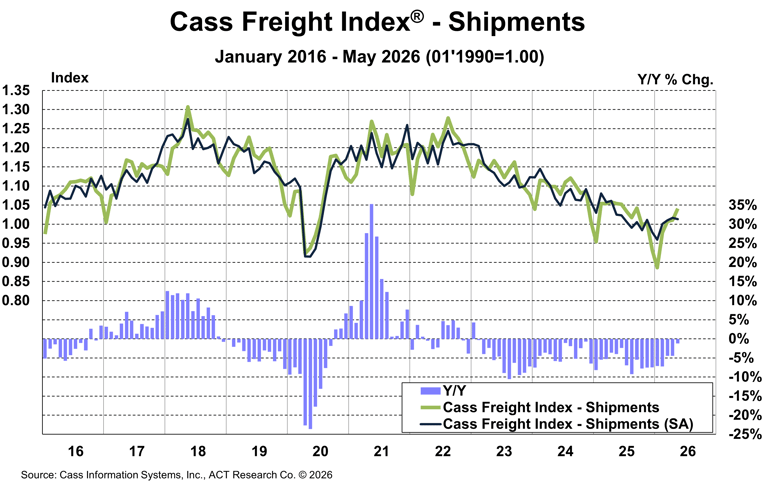
- The Cass Freight Shipments Index increased 3% month-over-month in May.
- Year-over-year shipment declines narrowed to just 1.2%, the smallest decline in 18 months.
- Industrial freight volumes appear to be stabilizing after a prolonged slowdown.
Capacity remains extremely tight
- Available truck capacity remains approximately 34% below prior-year levels.
- Tender rejection rates remain elevated for both dry van and refrigerated freight.
- Carriers continue to have leverage in many key freight markets.
Rates remain elevated
- Dry van and reefer spot rates softened slightly after Memorial Day.
- Flatbed rates continue moving higher.
- Contract rates remain under upward pressure due to limited capacity.
Freight Demand Is Showing Signs of Life
The latest transportation data suggests freight volumes may finally be responding to improving industrial activity. While shipment levels are still slightly below year-ago levels, the gap continues to narrow.
This matters because freight markets typically react quickly once demand begins recovering. Even modest increases in shipment volume can create significant pricing pressure when truck availability is already constrained.
Load postings remain roughly 45% above last year's levels, reinforcing the notion that freight demand is considerably stronger than it was throughout much of 2025.
For shippers, this means transportation teams should continue planning for a competitive capacity environment throughout the third quarter.
Capacity Is Still the Story
If there is one metric every shipper should be watching, it's tender rejection rates.
Current SONAR data shows:
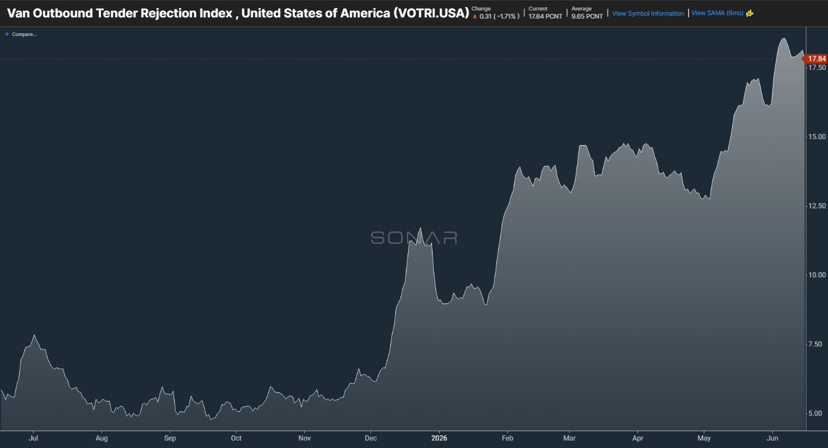 Dry Van Outbound Tender Rejection Index (VOTRI): 17.8%
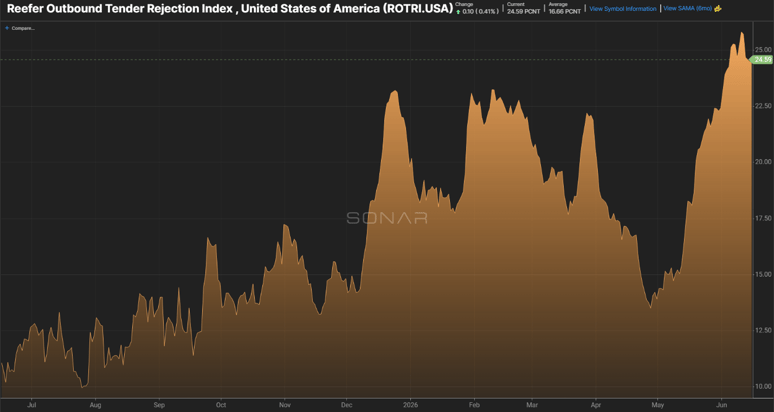 Reefer Outbound Tender Rejection Index (ROTRI): 24.6%
The charts above show both indexes climbing significantly throughout 2026, indicating carriers are increasingly rejecting contracted freight in favor of higher-paying opportunities.
For perspective, rejection rates in the high teens and twenties are generally associated with a seller's market where carriers hold the advantage.
What This Means for Shippers
- More load coverage challenges
- Increased spot market exposure
- Higher transportation costs
- Greater importance of carrier relationships
- Reduced flexibility for last-minute freight
Shippers relying heavily on transactional freight procurement should expect continued pricing volatility through the summer.
Regional Market Conditions
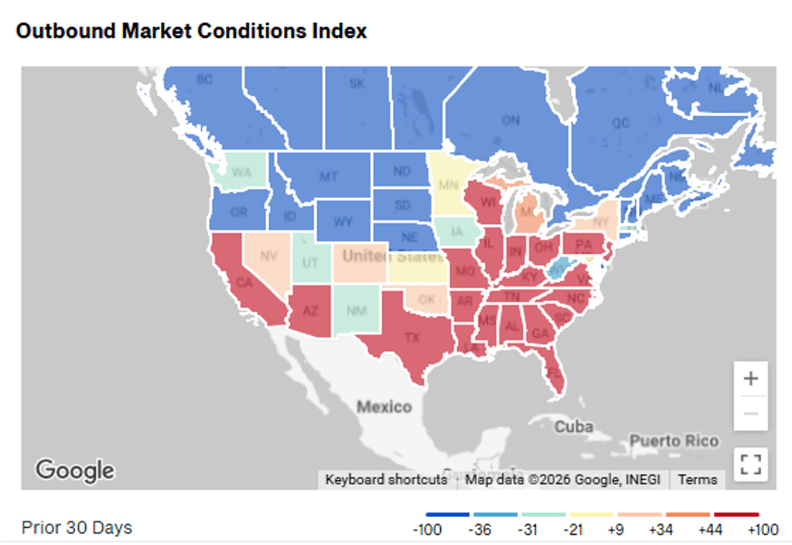
Lingering demand from seasonal produce in the Sun Belt states continues to drive demand regionally
This is especially important for:
- Food and beverage shippers
- Refrigerated freight shippers
- Retail distribution networks
- Consumer packaged goods manufacturers
Markets throughout Georgia, Florida, Alabama, Tennessee, the Carolinas, California, and Texas continue to experience capacity constraints that exceed national averages.
Fuel Prices Provide Some Relief
One positive development for transportation buyers is declining fuel costs.
Diesel prices have been trending lower, helping offset some of the inflationary pressure coming from tight capacity and elevated freight rates. While fuel remains a significant operating expense for carriers, lower diesel costs may help prevent transportation costs from rising even faster.
-png.png?width=824&height=549&name=On-Highway%20Diesel%20Fuel%20Prices%20(1)-png.png)
However, lower fuel prices alone are unlikely to offset the impact of limited truck availability.
Global Events Shaping Freight Markets
FIFA World Cup Creates Transportation Challenges
The 2026 FIFA World Cup is creating transportation impacts across parts of the United States this summer. Temporary road restrictions, increased traffic congestion, and heightened security measures around host cities may create localized transportation disruptions.
Shippers moving freight through host markets should proactively communicate with carriers and build additional lead time into transportation plans.

Tariff Refund Opportunities
Recent developments regarding U.S. tariff refunds could provide substantial financial benefits for importers and shippers that act quickly.
Companies with qualifying imports should work with customs brokers and trade compliance teams to evaluate potential refund opportunities that could improve supply chain economics during the second half of the year.
U.S.–Iran Peace Agreement

The recently announced agreement between the United States and Iran could reduce geopolitical uncertainty and support lower energy prices moving forward.
While the long-term economic impacts remain uncertain, reduced volatility in global energy markets would be a positive development for transportation buyers.
What Shippers Should Do Now
1. Secure Core Capacity
Focus on strengthening relationships with your highest-performing partners. In a tight market, trusted partners often become your most valuable supply chain asset.
2. Improve Forecast Visibility
Provide carriers and logistics providers with longer-term forecasts whenever possible. Better visibility improves load acceptance and network planning.
3. Review Routing Guides
Tender rejection rates remain elevated. Review backup carrier options and ensure contingency plans are current.
4. Monitor Seasonal Demand
Produce, retail replenishment, and summer consumer demand could quickly tighten capacity further in key regions.
5. Evaluate Transportation Spend
If your company may qualify for tariff refunds or other trade-related cost recoveries, now is the time to investigate those opportunities.
Looking Ahead
The freight market remains balanced on a knife's edge.
Demand is gradually improving. Capacity remains historically tight. Tender rejection rates continue to signal carrier strength. While fuel prices offer some relief, truckload shippers should prepare for a transportation environment where securing reliable capacity remains more important than chasing the lowest rate.
Unless capacity meaningfully expands, even modest freight demand growth could push the market into a more pronounced tightening cycle during the second half of 2026.
For now, the freight market appears to be catching its breath—but shippers should not mistake that for relaxation. The fundamentals continue to favor carriers, and proactive transportation planning will remain essential throughout the summer months.
Prepared by OverDrive Logistics for customer education and market awareness.
Source references include DAT, SONAR, CASS Information Systems, BBC, Stifel, and industry reporting.